The TV wall is usually the first thing anyone notices in a living room. A well-planned TV unit hides wires, stores everything from set-top boxes to board games, and turns a plain wall into a feature. Here is how to plan one that looks good and works for years.
1. Get the TV height right
The most common mistake is mounting the TV too high. When you sit on the sofa, the centre of the screen should be close to your eye level, usually about 40–45 inches from the floor. A TV placed higher strains the neck during long movies.
2. Plan the viewing distance
For a 4K TV, a comfortable distance is about 1 to 1.5 times the screen size. For a 55-inch TV, that is roughly 5 to 7 feet from the sofa. Measure your room before choosing the TV size, not after.
3. Choose a style that suits the room
Wall-mounted floating unit
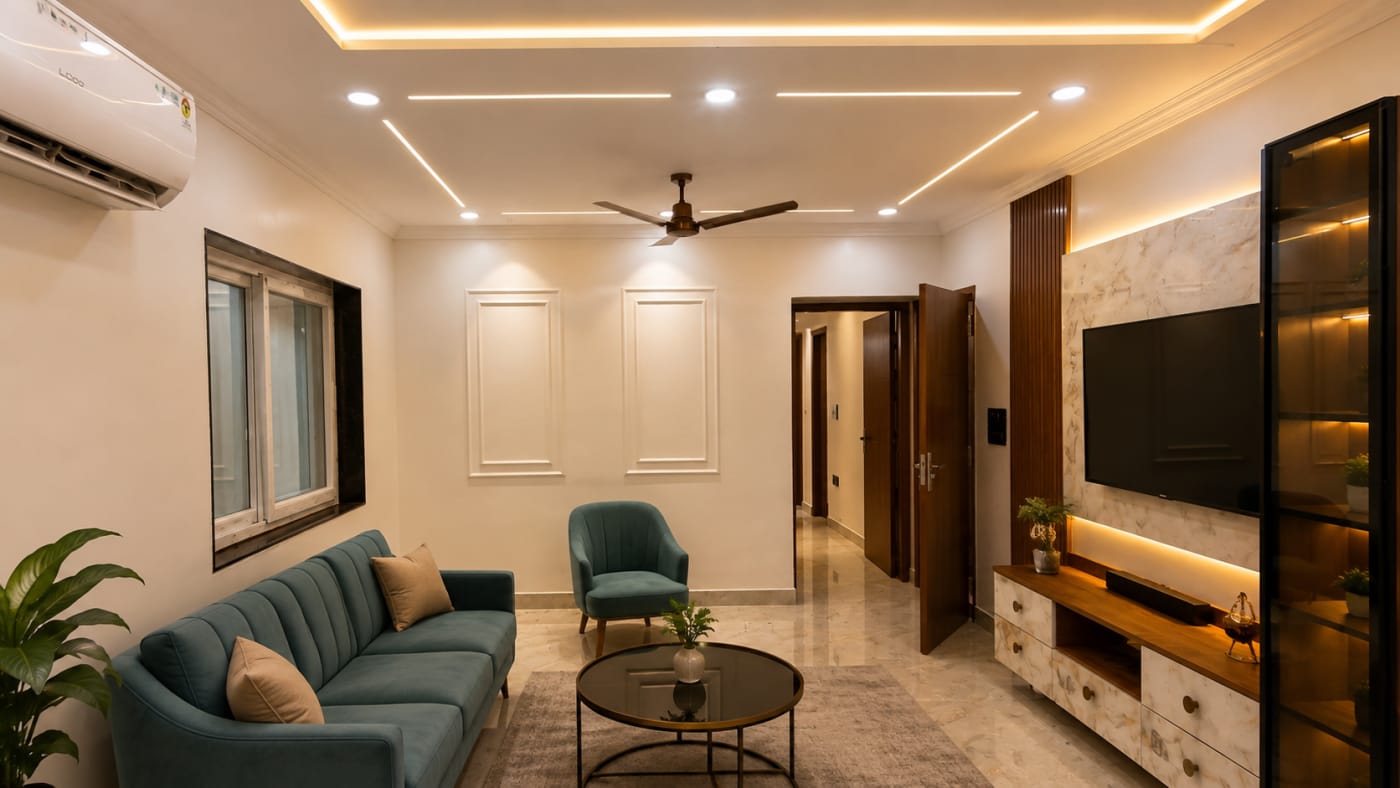
A low floating console with the TV on the wall above. It keeps the floor visible, makes cleaning easy and suits small living rooms.
Full-wall panelled unit
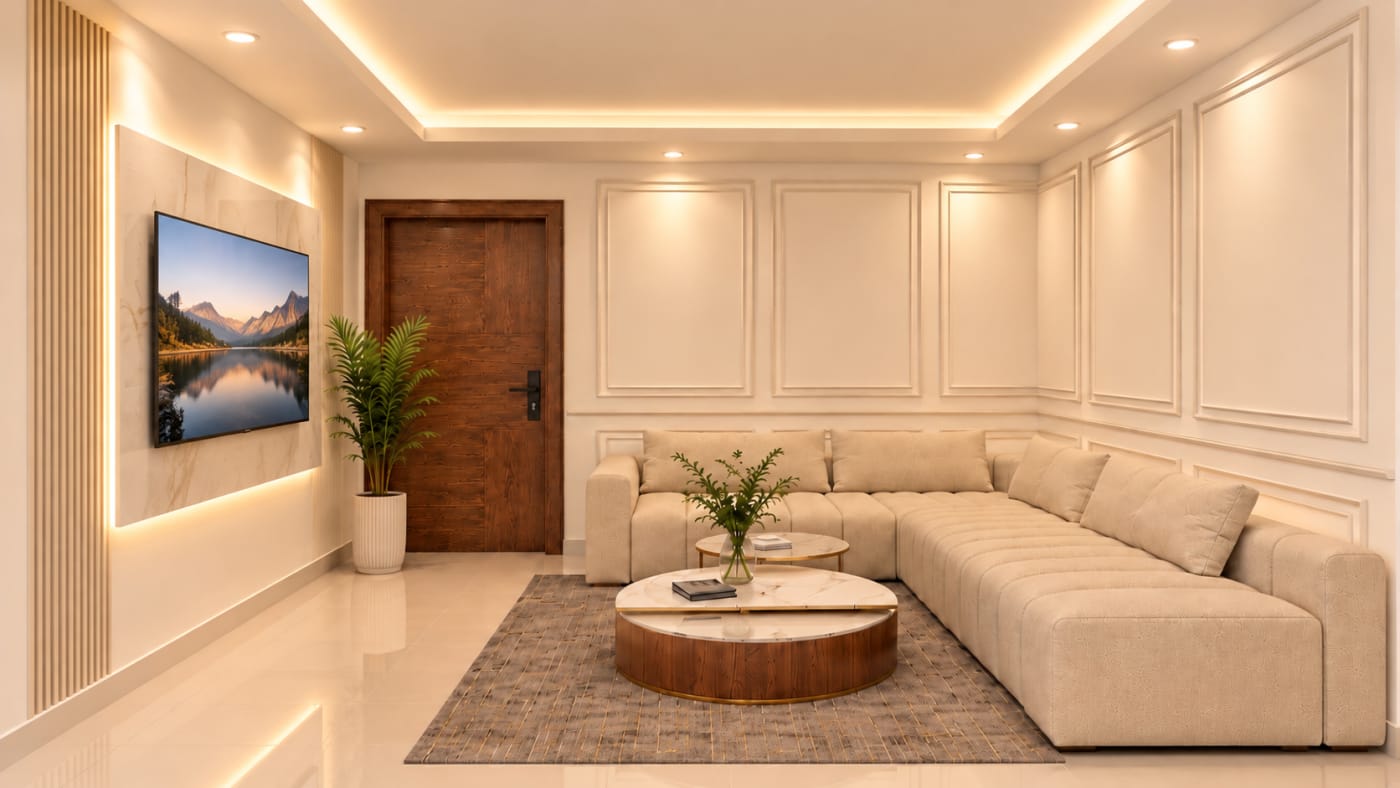
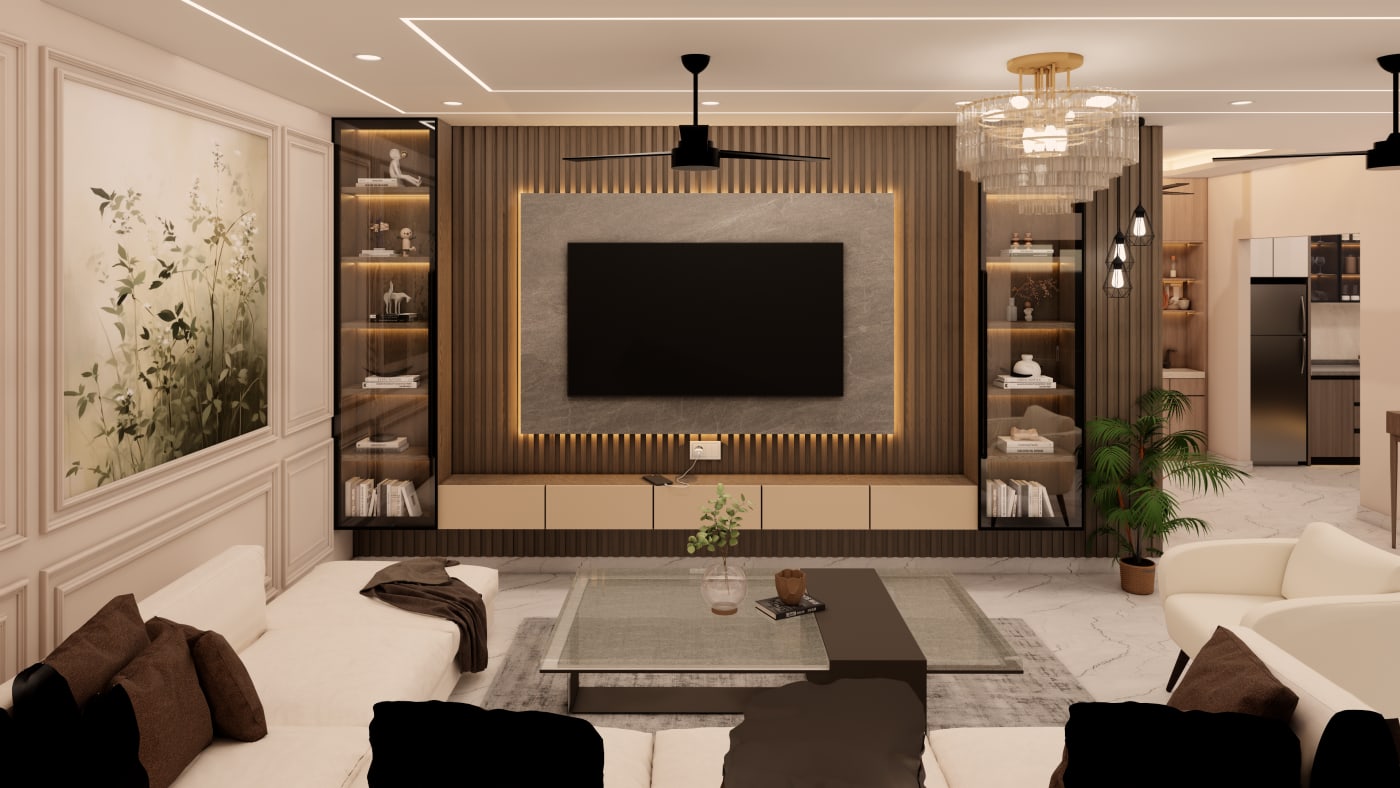
The whole wall is covered in panelling, with the TV set into it and storage below. Fluted panels, wood veneer or marble-finish laminates give a premium look.
TV unit with open shelves
Open shelves on one or both sides display books, plants and décor. Keep a mix of open and closed storage so the wall never looks cluttered.
Partition TV unit
In open layouts, a TV unit can double as a partition between the living and dining areas.
4. Hide every wire
- Plan a concealed conduit from the TV to the console before the wall is panelled.
- Keep enough sockets at the TV position and inside the console (TV, set-top box, soundbar, router, gaming console).
- Leave ventilation holes or a gap at the back of closed cabinets, so devices do not overheat.
5. Pick durable materials
- Carcass: BWR plywood or HDHMR, strong and good in humid weather.
- Finish: laminate for everyday durability, veneer for natural wood grain, or PU for a smooth seamless look.
- Feature panels: fluted MDF, charcoal panels or marble-look sheets behind the TV.
6. Light the TV wall
Soft profile lights or a cove above the TV wall make the panelling glow and reduce eye strain while watching in the dark. Keep strong lights away from the screen to avoid reflections. Our guide on cove lighting for living rooms explains how.
7. Avoid glare from windows
Do not place the TV directly opposite a large window. Daylight reflections make the screen hard to see. If there is no other wall, use sheer curtains or blinds.
Get a TV unit designed for your living room
See our living room designs, or book a free site visit in Noida, Ghaziabad, Delhi or Gurgaon. We measure your wall, plan the wiring and show you the TV unit in 3D before anything is made.