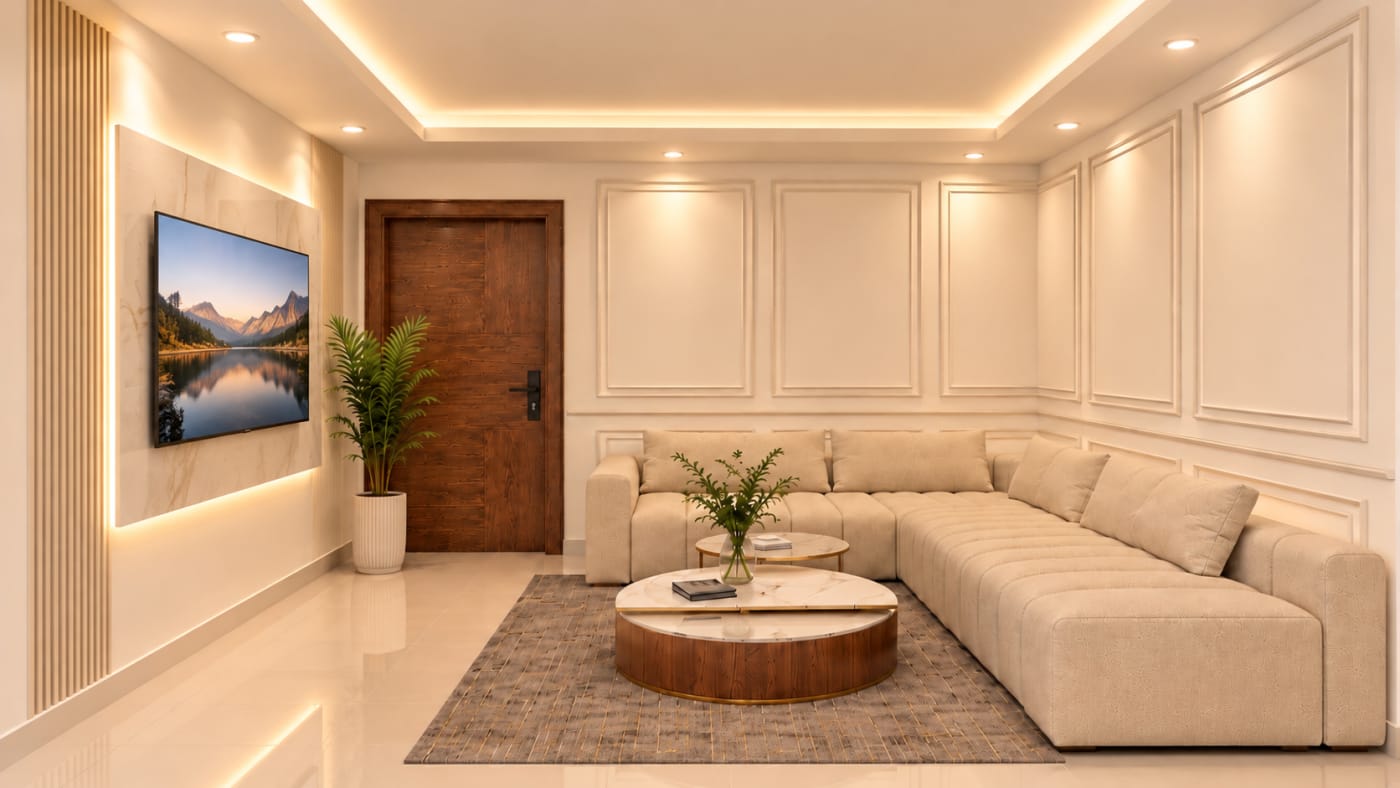
Walk into a good hotel lobby and you rarely see a bulb. The light seems to come from the ceiling itself, soft and even, with no glare. That effect is cove lighting: LED strips hidden in a recess of the false ceiling, bouncing light off the ceiling and down into the room. It is one of the simplest ways to make an ordinary living room feel premium.
What is cove lighting?
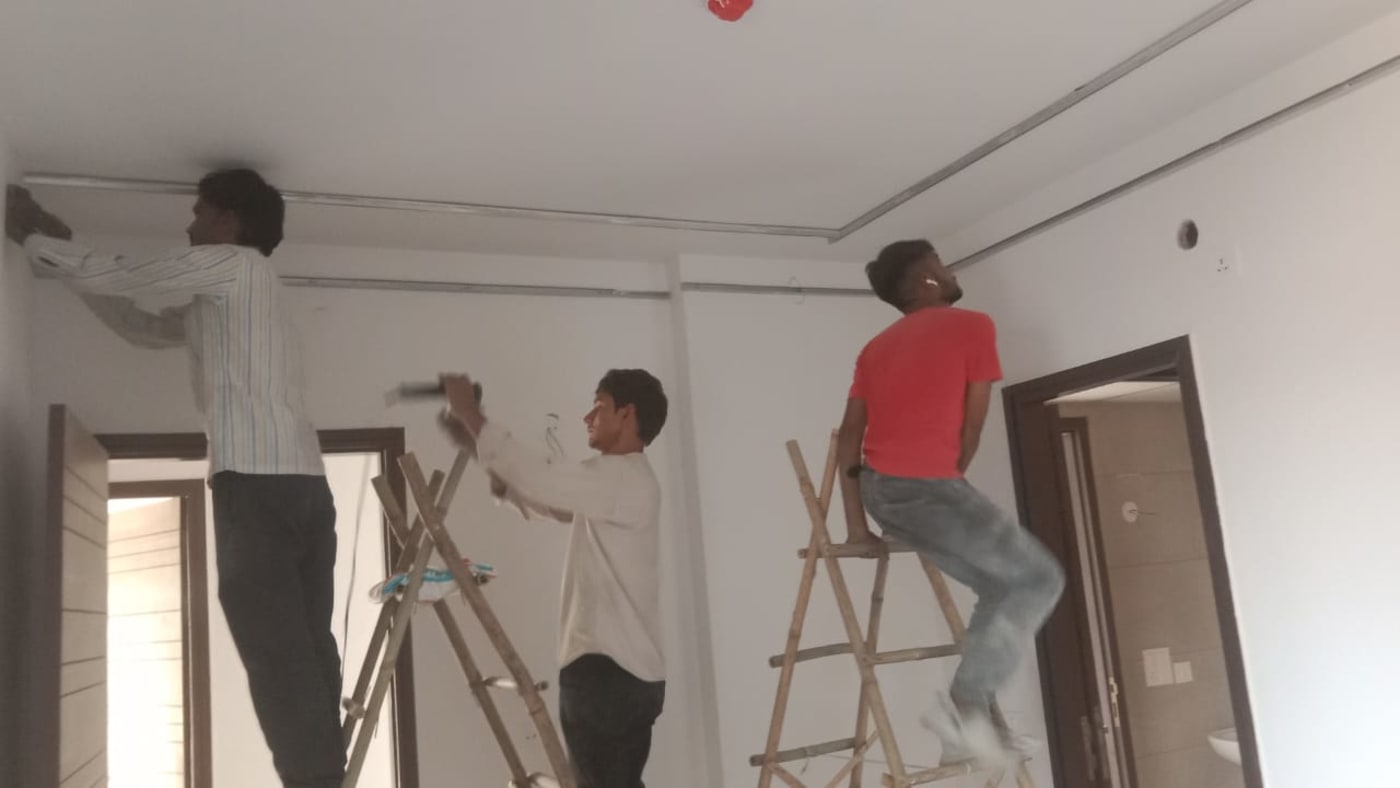
A cove is a small step or channel built into the edge of a false ceiling. An LED strip sits inside it, facing up or sideways, so you see the glow but never the light source. Because the light is reflected, it spreads evenly and does not hurt the eyes.
Why it works so well in living rooms
- Soft, glare-free light that is perfect for watching TV and evening conversations.
- Makes the ceiling look higher, because the light washes up and outwards.
- Creates mood: keep the cove on and the main lights off for a calm, lounge-like feel.
- Hides wiring and AC pipes inside the false ceiling.
Getting the details right
1. Choose warm white
For living rooms, choose warm white LED strips of about 2700K–3000K. They make wood, fabric and skin tones look rich. Cool white (around 6000K) looks clinical and is better kept for kitchens and study areas.
2. Use a good LED strip and profile
Ask for a strip with a high colour rendering index (CRI 90 or more) and fix it inside an aluminium profile. The profile keeps the strip cool, so it lasts longer and stays evenly bright.
3. Give the light room to spread
The cove opening should leave a gap of a few inches between the strip and the ceiling. Too tight, and you get a harsh bright line instead of a soft glow.
4. Keep the driver reachable
Every LED strip needs a driver (power unit). Place it where it can be reached through a small access panel, so it can be changed later without breaking the ceiling.
5. Add a dimmer
A dimmer turns one ceiling into many moods: bright for guests, low for movie night.
Cove lighting design ideas
- Perimeter cove: runs around the whole room. Classic and works in every home.
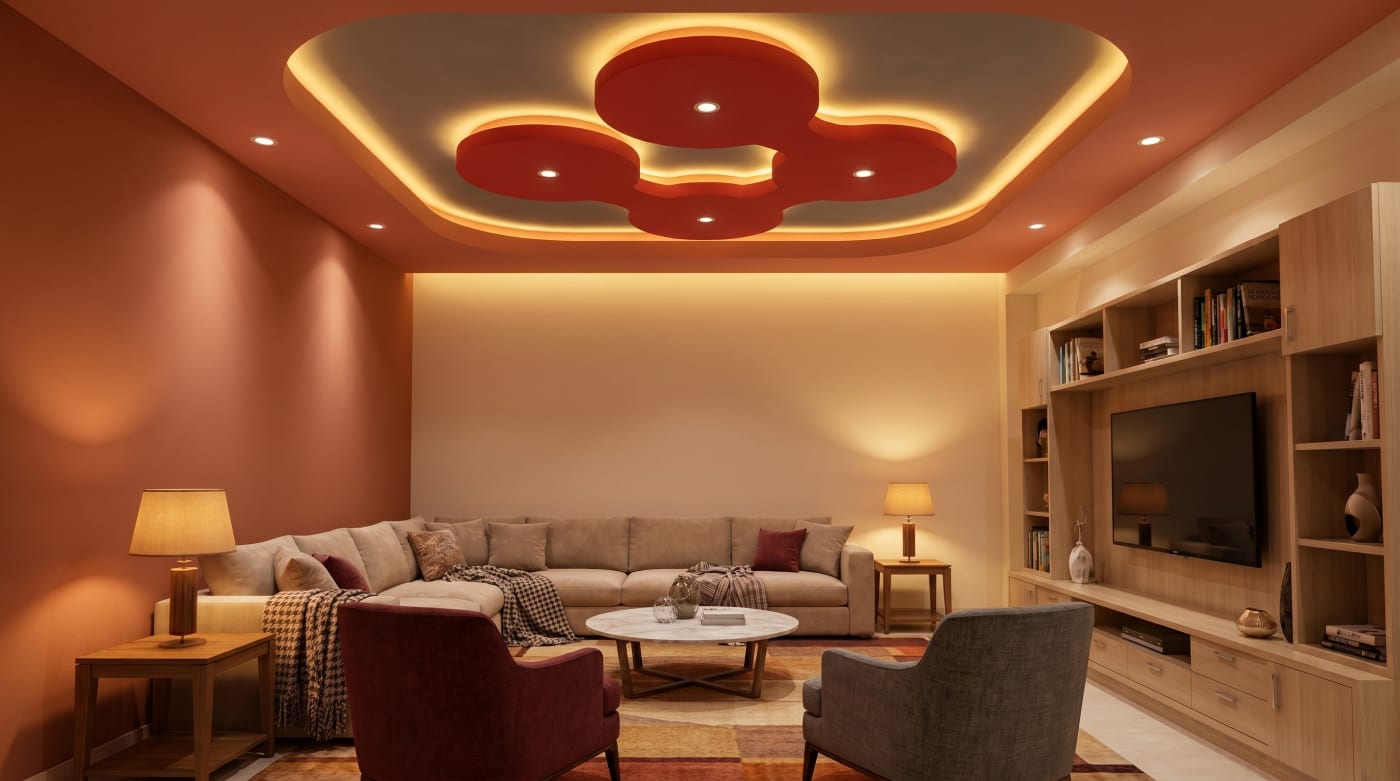
- Floating centre panel: a raised central panel with light glowing around its edges.
- Cove plus spotlights: soft cove light for mood, with a few spotlights over the sofa and art.
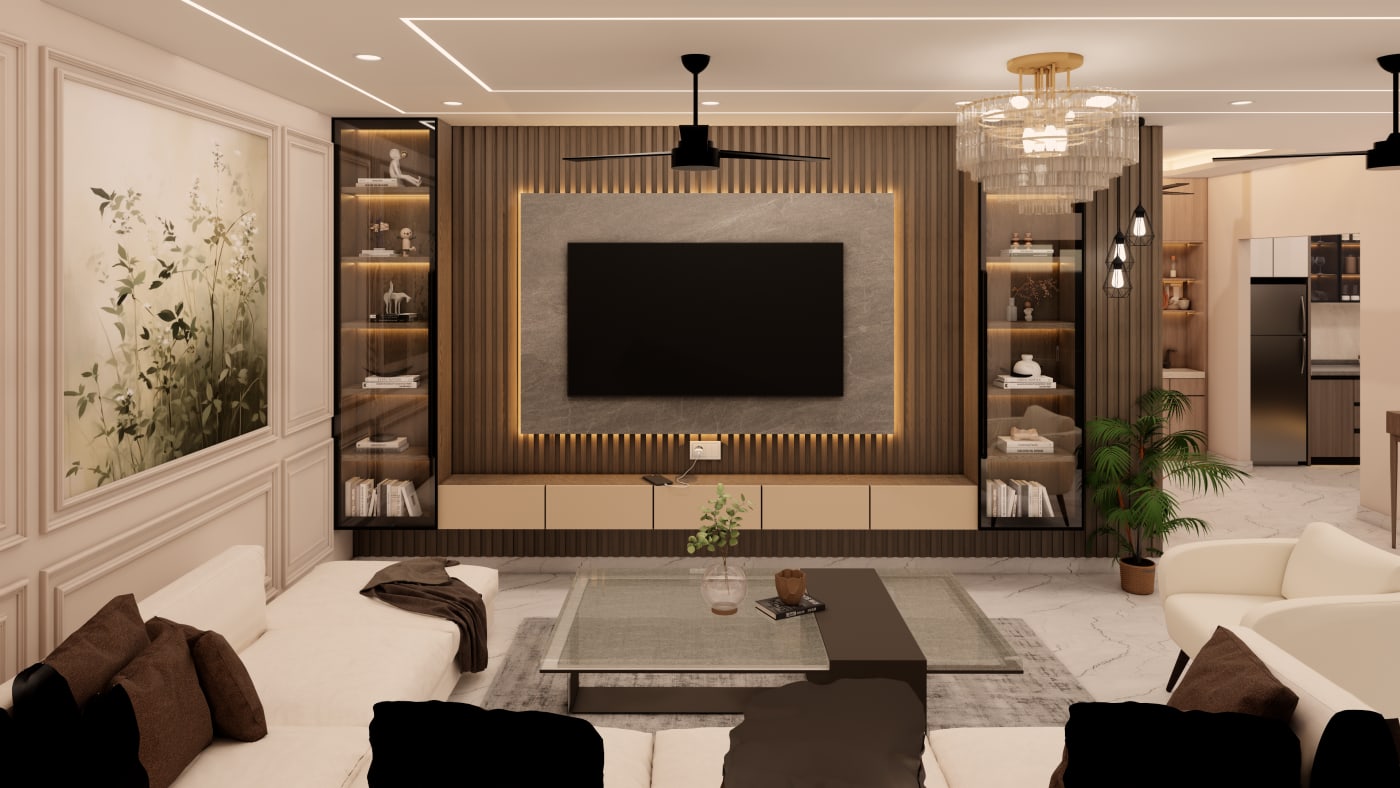
- TV wall wash: a cove above the TV wall that lights up wooden or fluted panelling.
Mistakes to avoid
- Using cheap strips that change colour within a year.
- Mixing warm and cool lights in the same room.
- Placing the cove too close to the ceiling, which creates hot spots.
- Forgetting switch planning, for example no separate switch for the cove.
How much does it cost?
A cove ceiling costs roughly 20% more than a flat false ceiling, because of the extra drop and light channel. Our false ceilings start at about ₹120 per sq. ft., and each light point is about ₹450. You can get an instant figure for your room with the false ceiling cost estimator, or read our detailed false ceiling cost guide.
Planning cove lighting for your home?
We design and install cove-lit false ceilings across Noida, Ghaziabad, Delhi and Gurgaon. Book a free site visit and see your living room in 3D before work starts.