Gypsum and POP (Plaster of Paris) are the two most common false ceiling materials in Indian homes. Both are made from gypsum and both give a smooth white finish, so they look almost the same once painted. The difference is in how they are made and installed, and that affects cost, time, mess and cracks.
Quick comparison
| Point | Gypsum board | POP |
|---|---|---|
| Form | Factory-made boards fixed to a metal frame | Powder mixed with water at site and applied on a frame |
| Cost | Similar per sq. ft. | Similar per sq. ft., more labour |
| Installation time | Fast, about 7 days for a home | Slower, needs drying time |
| Mess at site | Low, mostly dry work | High, wet work and dust |
| Finish | Even and uniform | Depends heavily on the worker's skill |
| Curves and mouldings | Good for straight lines and simple curves | Best for curves, domes and detailed designs |
| Cracks | Low, if joints are taped properly | More likely if the mix or curing is poor |
When gypsum is the better choice
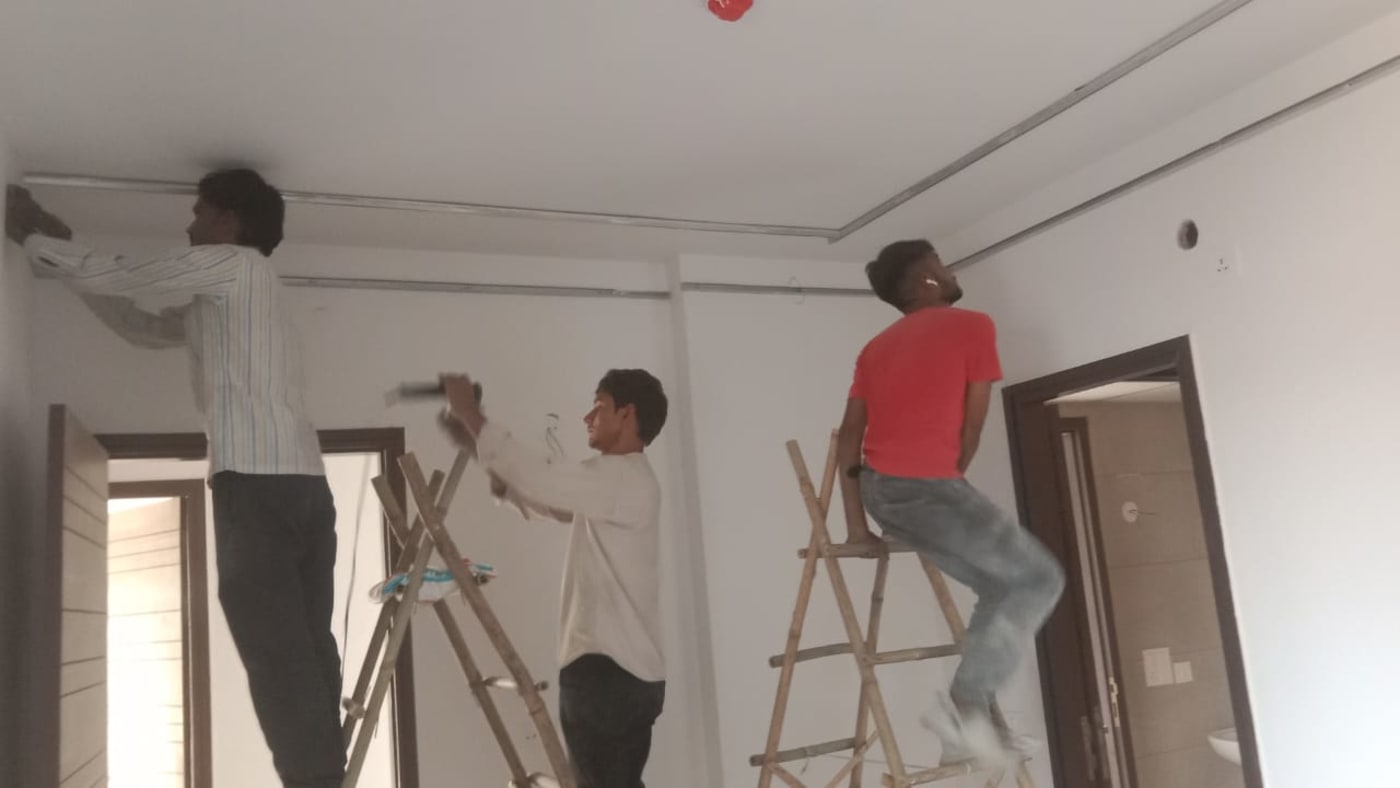
- You want the work finished fast, for example before a move-in date.
- You live in a ready flat and want less dust and mess.
- Your design is straight lines, cove lighting or simple layers. That covers most modern homes.
- You want a consistent finish across all rooms.
When POP is the better choice
- You want curved, circular or dome shapes, or classic mouldings.
- You need to repair or match an existing POP ceiling.
- The design has many small details that boards cannot follow easily.
What about bathrooms and balconies?
Neither standard gypsum nor POP likes constant moisture. For bathrooms, balconies and areas near the kitchen sink, use moisture-resistant gypsum board or PVC panels. PVC is waterproof and easy to clean, though it looks less premium than a painted ceiling.
How to avoid cracks with either material
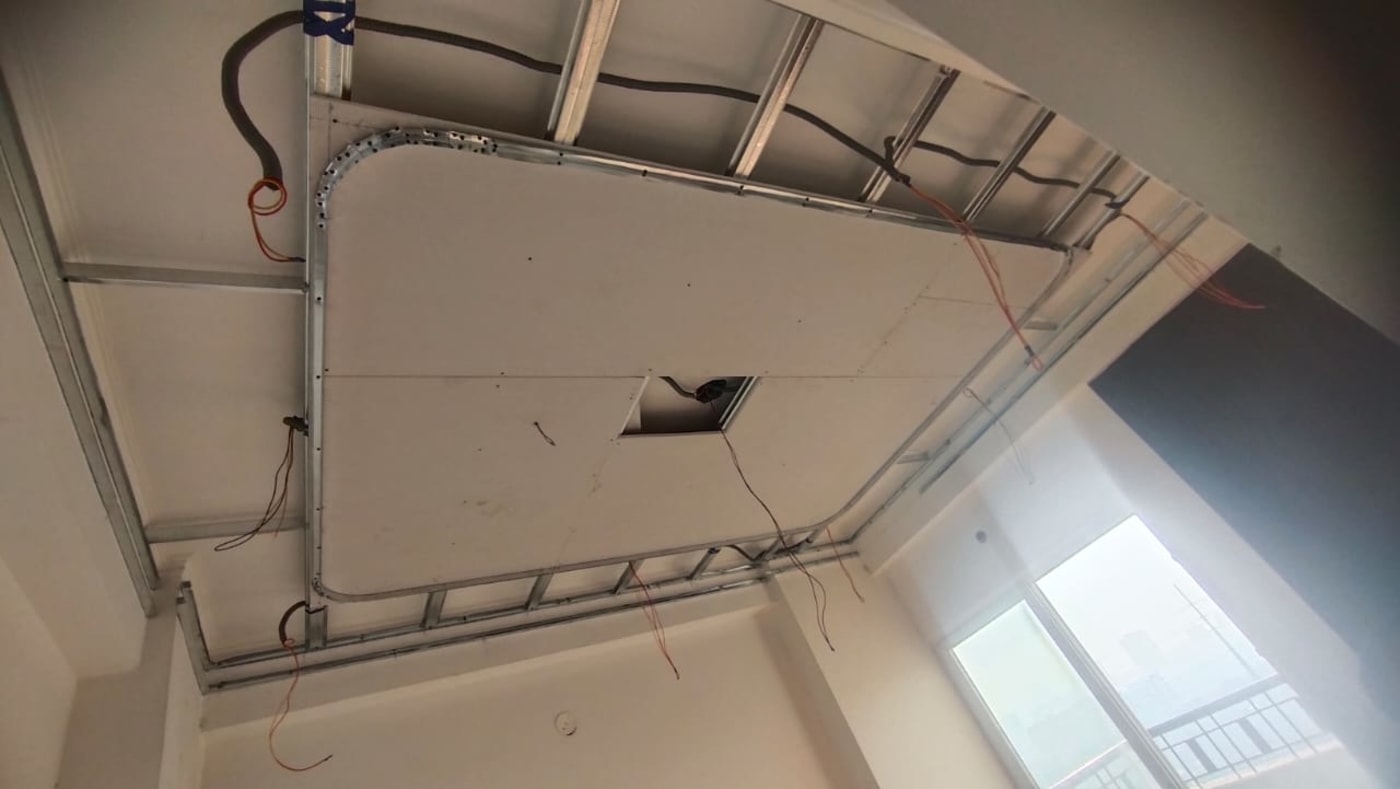
- Use galvanised steel channels, not wooden battens, for the frame.
- Keep proper spacing between hangers so the ceiling does not sag.
- Tape and fill every joint before putty.
- Leave a small shadow gap where the ceiling meets the wall, so building movement does not crack the edge.
- Choose a contractor who gives a written anti-crack warranty. Ours is 10 years.
Our recommendation
For most flats in Gurugram, Noida, Ghaziabad and Delhi, gypsum is the better default: faster, cleaner and more consistent. Use POP only where the design truly needs curves or detailed work. Many homes mix both: gypsum for the main ceiling and POP for one feature element.
See finished designs and work out your cost with the false ceiling cost estimator, or read the false ceiling cost guide for Delhi NCR.